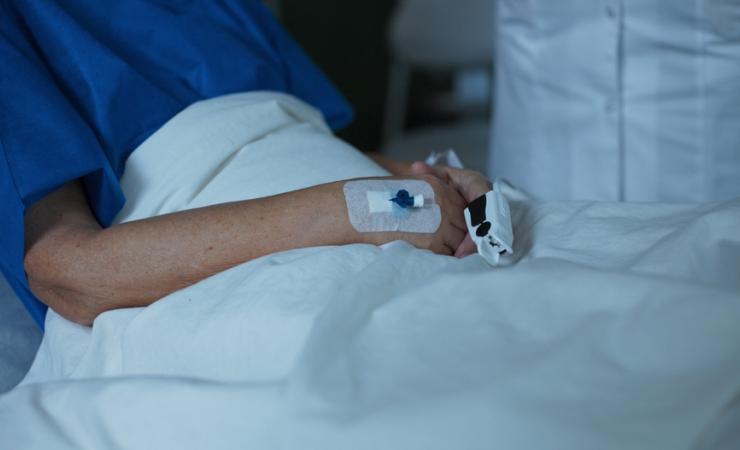
Long-term health problems are responsible for two-thirds of hospital bed occupancy in Europe. For patients, hospitalisation is not only physically and emotionally tiring, it also means missing out on family life, work, and leisure activities. For healthcare systems, caring for the growing numbers of patients with chronic diseases is becoming increasingly difficult.
But what if we could shorten or even avoid some hospitalisations entirely by moving the patient’s care from the hospital to the home? Efforts to test this in the past have been rather small and fragmented, and we still lack the knowledge, training and tools to scale them up.
The goal: personalised, hospital-level treatment at home
The HospitalAtHome (H@H) project aims to create a model where patients can receive personalised, hospital-level treatment at home, thanks to intelligent, connected systems and devices that ensure the safety, quality and continuity of care. The successful completion of the H@H project could trigger a major transformation in health care delivery.
“Hospital@Home is more than a project - it sparks a new digital era to provide even better care while at the same time improving efficiency for both patients and hospitals,” said project industry leader Daniel Schobben of Salvia Bioelectronics.
The project will focus on five disease areas: cardiovascular conditions (heart failure, atrial fibrillation, and ischemic heart disease), pulmonary diseases (chronic obstructive pulmonary disease and pulmonary fibrosis), minor stroke / TIA (transient ischemic attack), migraine, and cluster headaches. These disease areas were selected due to their profound impact on patients, their high prevalence and severity, and the economic burden associated with them.
From mapping, to testing, to implementing
The project will approach each disease area in three phases. First, the project team will map the field in order to understand current care pathways, technologies, and (importantly) any barriers to implementing hospitals at home.
Next, the project team will trial and co-develop digital tools and care models in a testing phase. By working closely with patients, clinicians and informal carers, the project team will identify what approaches are effective and which need further development.
At this stage, proven CE-marked medical devices and interoperable platforms will be piloted to assess their usability, effectiveness, and system integration. The devices and data collection techniques will vary according to the disease under study, but could include a range of wearables, as well as patient-reported data collected via apps.
The final phase will focus on implementing the H@H care models at scale in five leading hospitals across Europe. The studies, involving around 3 600 patients in total, are designed to evaluate the care models’ clinical effectiveness and safety, as well as their usability, patients’ and healthcare workers’ experiences, and their impact on health systems. The project includes an economic impact assessment framework to evaluate the cost-effectiveness, resource use, and value generation of the H@H care pathways.
Empowering healthcare professionals and improving patient experience
“From a clinical perspective, Hospital@Home represents a shift towards appropriate, value-based care supported by digital technologies,” said project coordinator Linetta Koppert of Erasmuc MC. “It empowers healthcare professionals to deliver high-quality care while reducing unnecessary hospital burden and improving patient experience.”
The results of the project will feed into a Knowledge Hub packed with best practices, lessons learned, and guidelines tailored to different stakeholders including patients, healthcare providers, and hospital managers. What’s more, many of the project’s platforms, tools and databases will be open for future adaptation and reuse, further boosting their impact.
By working with the European University Hospital Alliance, the project hopes its results and resources will reach at least 1 million patients in over 10 countries. Once implemented, the H@H approach could cut the number of hospitalisations by around 10 %, reduce hospital stays by 3-5 days, lower healthcare costs by 20-30%, and improve patient-reported outcomes and experience scores by 20-30%.